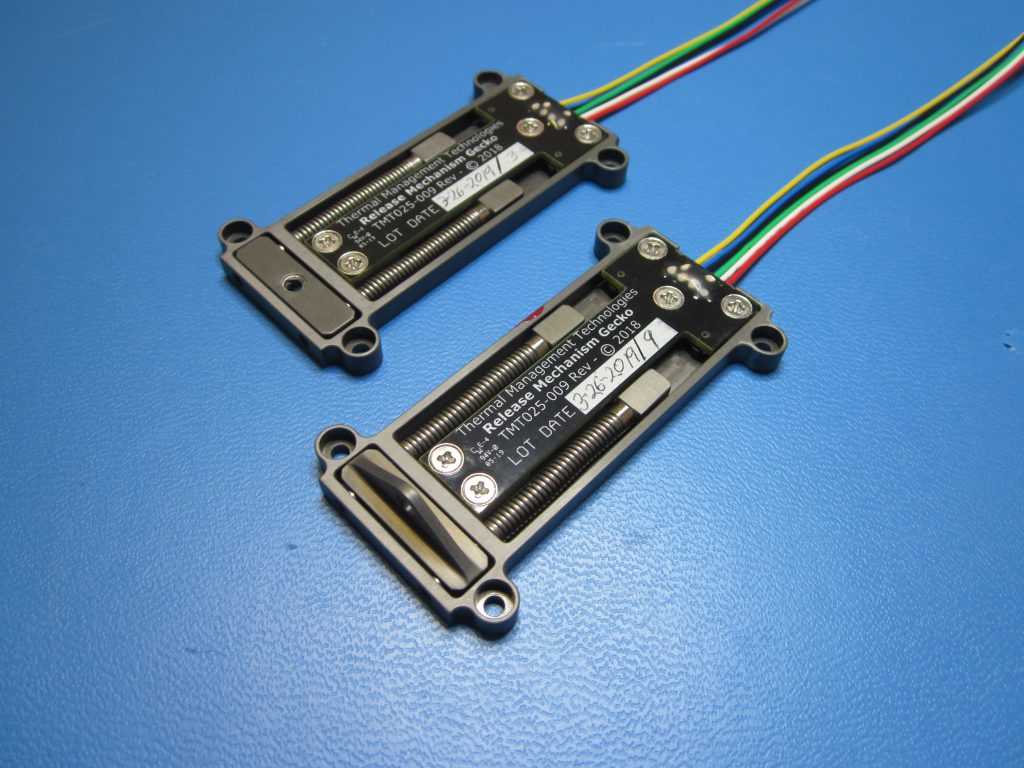
After two years, a small but mighty piece of NASA SmallSat technology has transferred successfully to industry, thanks to a connection made at the 2017 Small Satellite Conference in Logan, Utah.

National Aeronautics and Space Administration
Goddard Space Flight CenterGoddard Space Flight Center
Connecting internal inventors with external partners.
After two years, a small but mighty piece of NASA SmallSat technology has transferred successfully to industry, thanks to a connection made at the 2017 Small Satellite Conference in Logan, Utah.
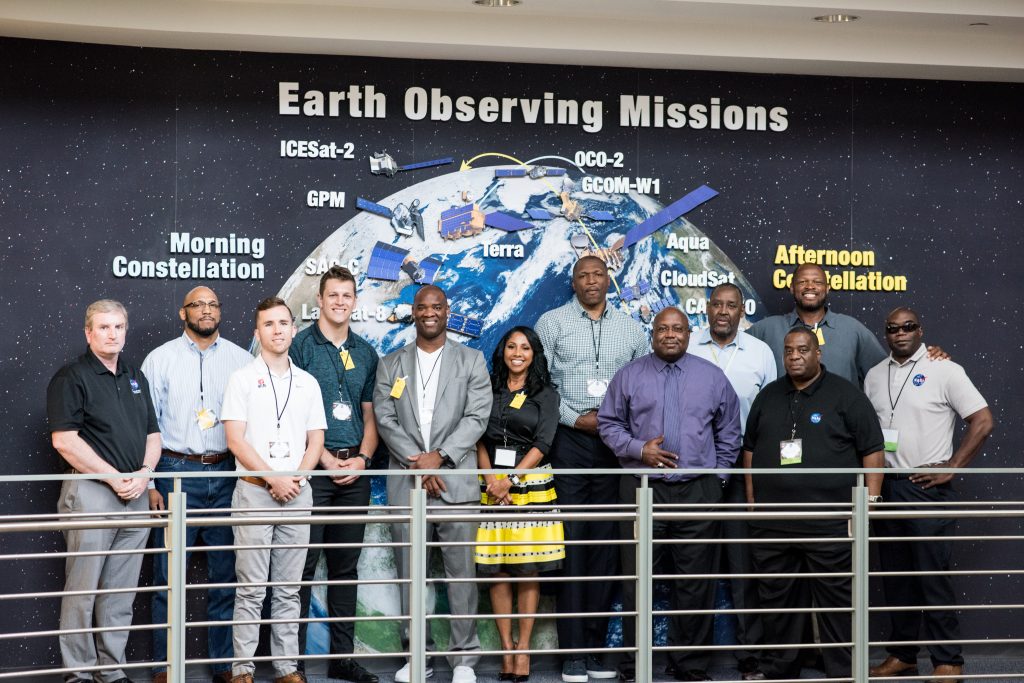
On June 24-26, professional athletes explored the world of space technology at NASA’s Goddard Space Flight Center in Greenbelt, Maryland. The NASA Commercialization Training Camp invited current and former athletes with the NBA and NFL to spend three days at Goddard and learn about opportunities to license and commercialize NASA technology.
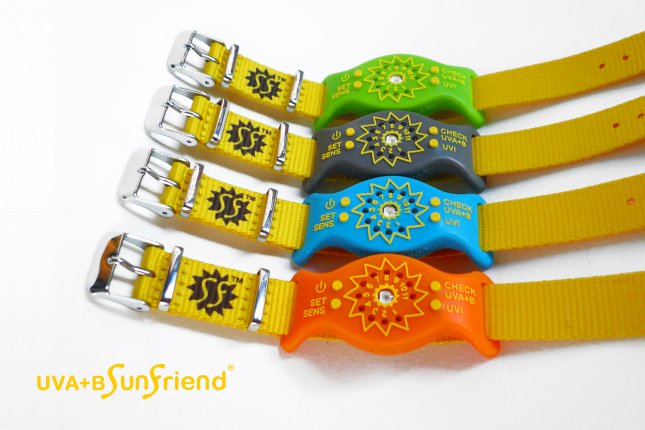
The UVA+B SunFriend. Image Credit: Sensor Sensor LLC
Each month the Strategic Partnerships Office will tell the story of a renowned innovator at NASA’s Goddard
Space Flight Center and show how their technological breakthroughs are brought from the labs to our lives.
This month features UV Light Detection, a technology that gives NASA’s Solar Dynamics Observatory (SDO)
more accurate measurements of the Sun’s radiation and is used to measure individual’s daily sun intake.

The Jon McBride Software Testing and Research Team gathers in front of STF-1.
The very first spacecraft built in West Virginia reached completion last year, thanks to a collaboration between NASA’s Independent Verification and Validation (IV&V) Facility, West Virginia University (WVU) and the NASA West Virginia Space Grant Consortium (WVSGC). The history-making CubeSat is called STF-1, short for Simulation to Flight 1, and it launched into space at the end of 2018. [Read more…]
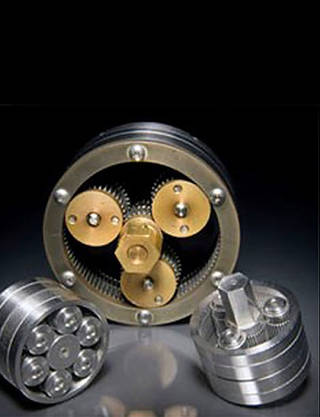
Gear bearing technology is a mechanical engineering innovation combines gears and bearings into
one unit.
Each month the Strategic Partnerships Office will tell the story of a renowned innovator at NASA’s Goddard Space Flight Center and show how their technological breakthroughs are brought from the labs to our lives.This month features gear bearings, developed by John Vranish to increase resolution for telescopes, and the licensing of this technology to Bahari Energy.
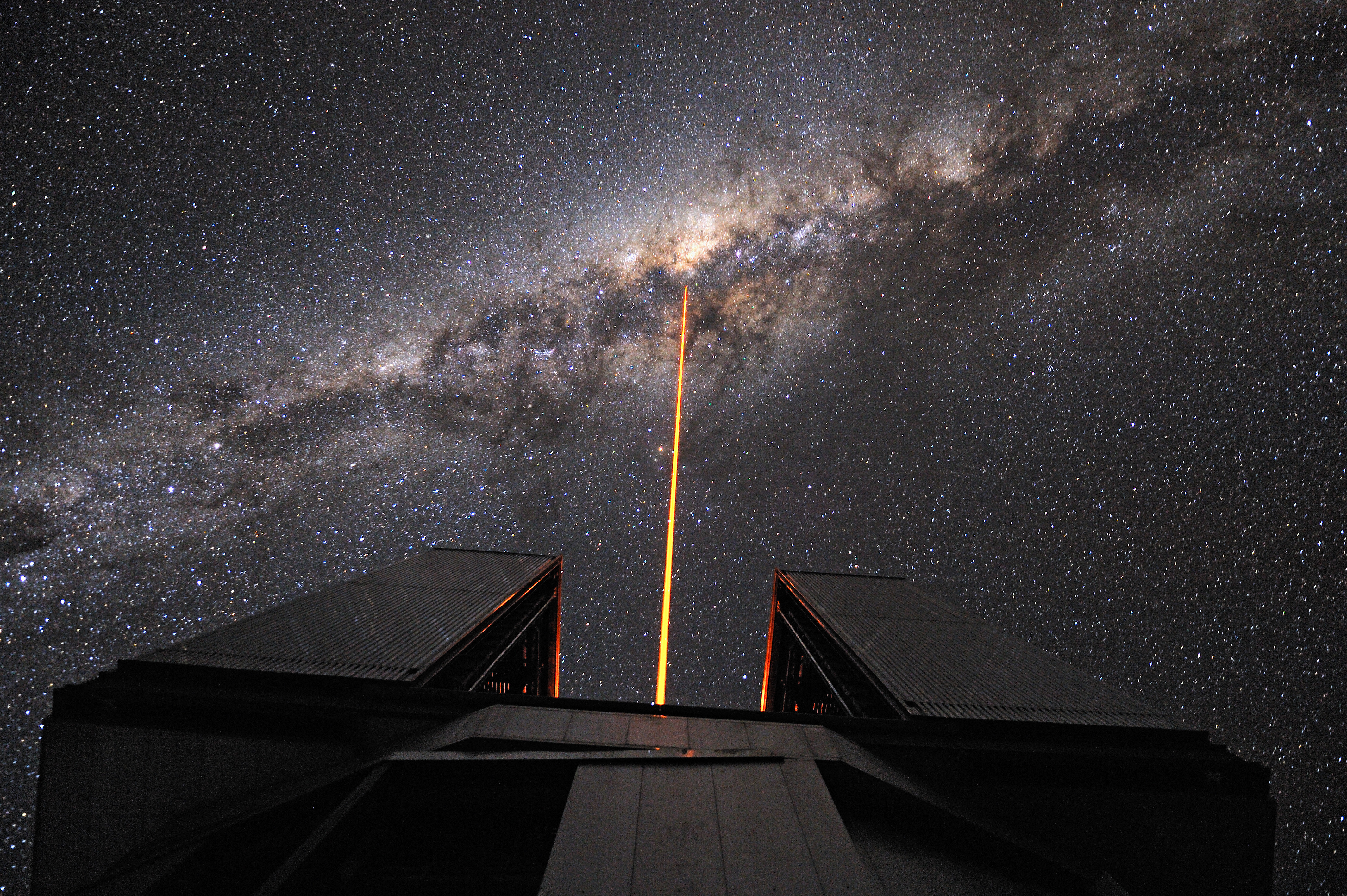
Part of the European Southern Observatory’s Very Large Telescope, this laser guide star helps astronomers correct blurry images caused by atmospheric turbulence. Photo credit: G. Hüdepohl/ESO
Telescopes like the Hubble Space Telescope have a huge advantage over ground-based telescopes — they don’t have to deal with Earth’s atmosphere. The atmosphere’s constant state of flux causes trouble for telescopes on the ground, due to its tendency to distort light traveling through it. One solution to this problem involves a technique called adaptive optics. With it, astronomers can correct blurry images and produce better pictures. [Read more…]
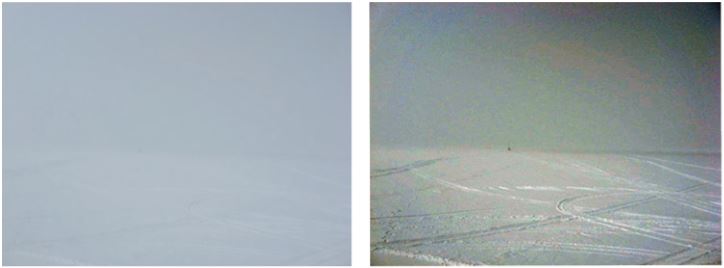
HHT2 technology allows for image “noise” to be removed for a clearer picture. Credit: NASA
Each month the Strategic Partnerships Office will tell the story of a renowned innovator at NASA’s Goddard Space Flight Center and how their technological breakthroughs are brought from the labs to our lives. This month features the Hilbert Huang Transform 2 (HHT2), a two dimensional adaptation to the original Hilbert Huang Transform. This 2D analysis software clarifies distorted images and enables enhanced interpreting of images.
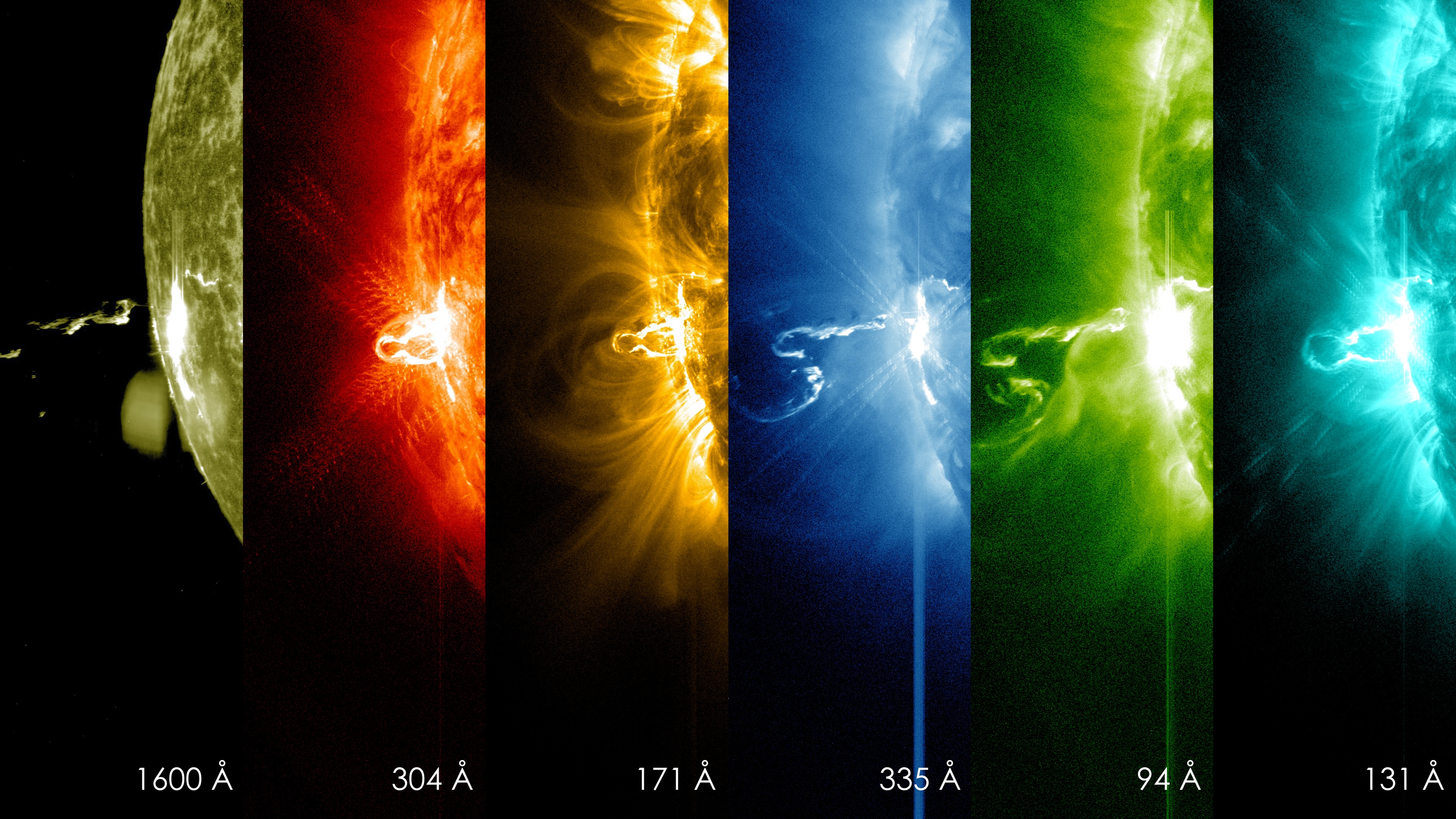
X class solar flare measured in different wavelengths. Credit: NASA GSFC SDO Flickr
Each month the Strategic Partnerships Office will tell the story of a renowned innovator at NASA’s Goddard
Space Flight Center and show how their technological breakthroughs are brought from the labs to our lives.
NASA is turning the U.S. power grid into a large instrument designed to measure space weather using
geophysical imaging and, after a successful test program, is partnering with more power companies to
increase coverage.
NASA’s Hilbert-Huang Transform. Credit: NASA GSFC
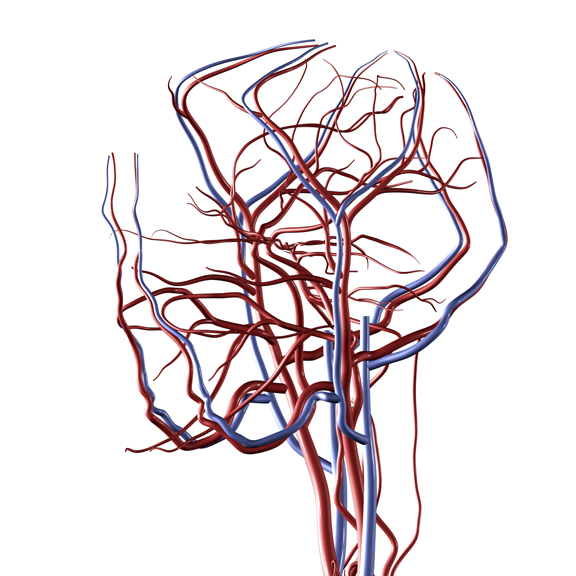
Image converted using ifftoany
Each month the Strategic Partnerships Office will tell the story of a renowned innovator at NASA’s Goddard Space Flight Center and how their technological breakthroughs are brought from the labs to our lives. This month features the Hilbert-Huang Transform/Real-Time Data Processing System, from innovator Dr. Norden Huang. This nonlinear and nonstationary signal analyzer is being licensed to DynaDx for numerous applications in the medical industry.
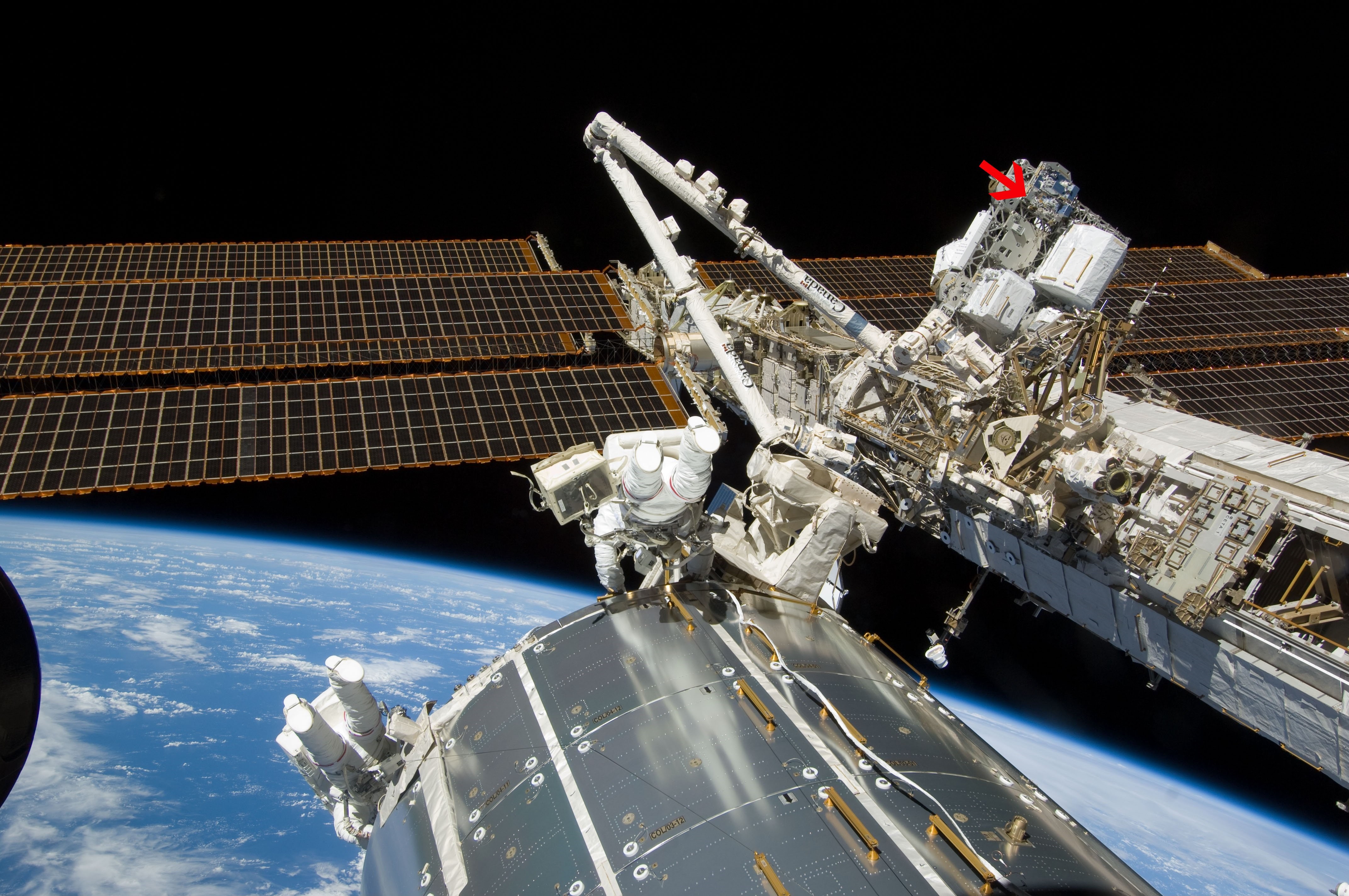
SpaceCube onboard the International Space Station. Credit: NASA Goddard Flickr
Each month the Strategic Partnerships Office will tell the story of renowned innovators at NASA’s Goddard
Space Flight Center and show how their technological breakthroughs are brought from the labs to our lives.
Goddard Space Flight Center licensed the SpaceCube 2.0 design to Maryland based Genesis Engineering
which will produce space based processors.