
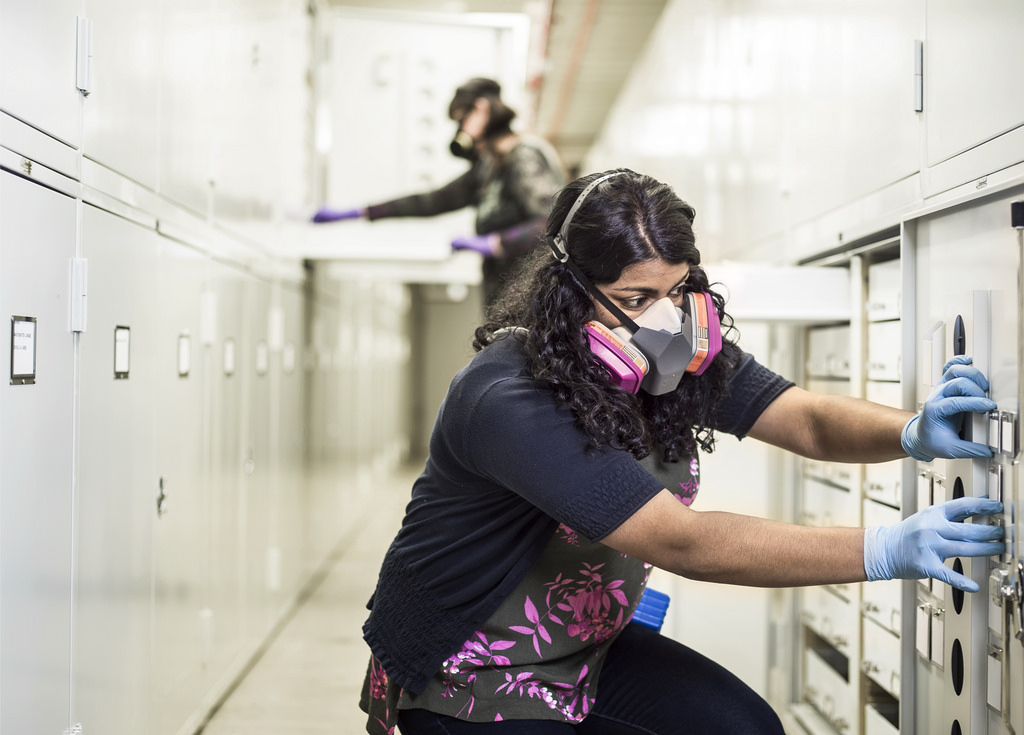
Nithin Abraham works at the Smithsonian’s Museum Support Center in Suitland, Maryland. Credit: NASA/Chris Gunn
Every day, we’re surrounded by billions of tiny, unseen objects. Molecules of all kinds float like invisible motes of dust, impossible to detect with the naked eye but sometimes discernable through smell.
“Think about when you buy a home — you may have new furniture, such as sofas, mattresses, or memory foam pillows, and freshly painted rooms,” says Nithin Abraham, a thermal coatings engineer at NASA’s Goddard Space Flight Center. “These common household items often have a new smell associated with them, and it’s a result of volatile organic compounds being released into the air.”
As part of her job, Abraham has to think on the tiniest of scales. At NASA, she works on coatings technology research efforts. Specifically, she tries to address molecular contamination, finding ways to keep molecules from interfering with delicate instruments bound for space. Even the smallest deposition of chemical species on a sensitive telescope mirror can keep it from working properly. [Read more…]
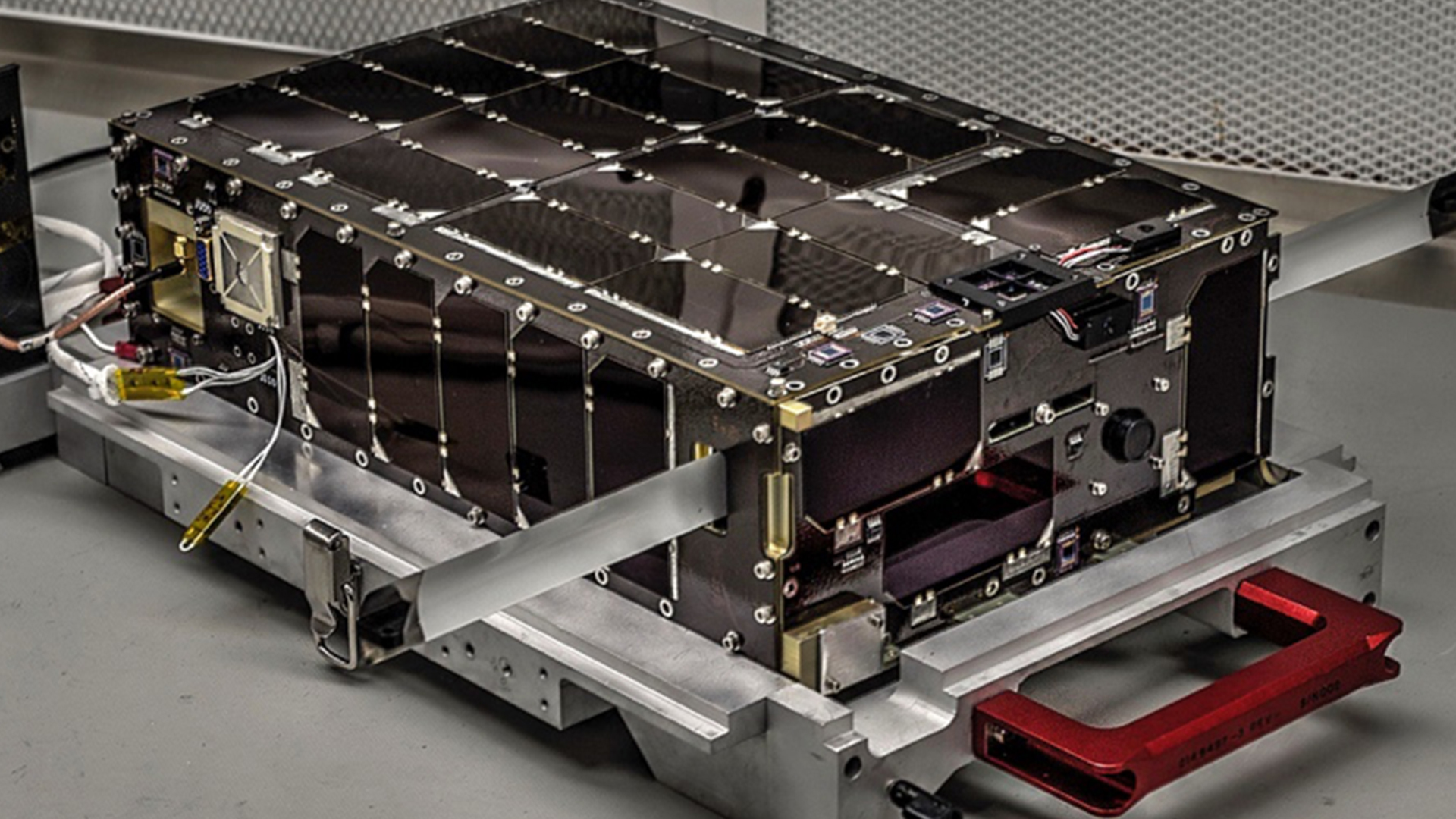
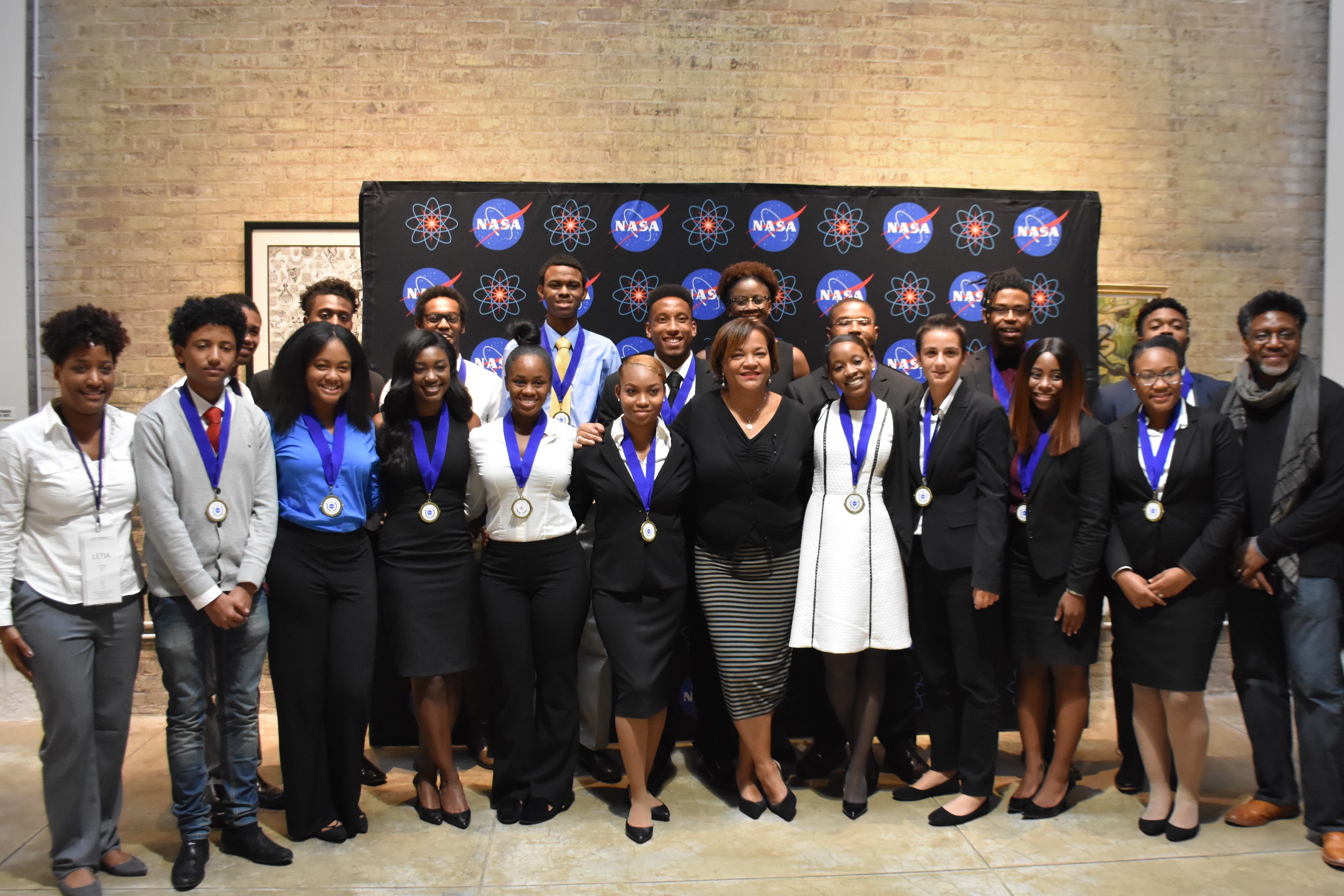
 In celebration of Earth Day, NASA’s Goddard Space Flight Center would like to highlight a few patented technologies that have helped and have the potential to help make our Earth a better place. In today’s world it has become more apparent than ever to minimize our carbon footprint, and to become more efficient. Goddard’s engineers and scientists develop cutting edge technology with “green” practices in mind. Some of Goddard developed “green technologies” include a variety of space-application uses, in addition to being used in other non-space applications here on Earth.
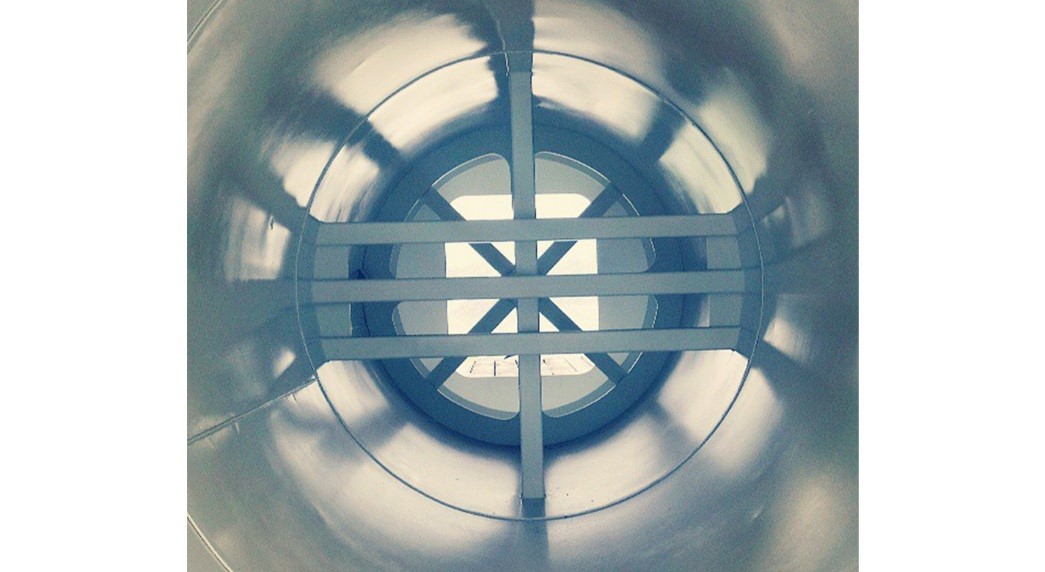 This innovation allows the propulsion branch to internally clean flight tubing using water and nitrogen gas, instead of harmful chemicals such as isopropyl alcohol. This approach actually reduces the use of alcohol based cleaners by as much as 90%, significantly lessening the impact of hazardous waste on our environment. Click on
 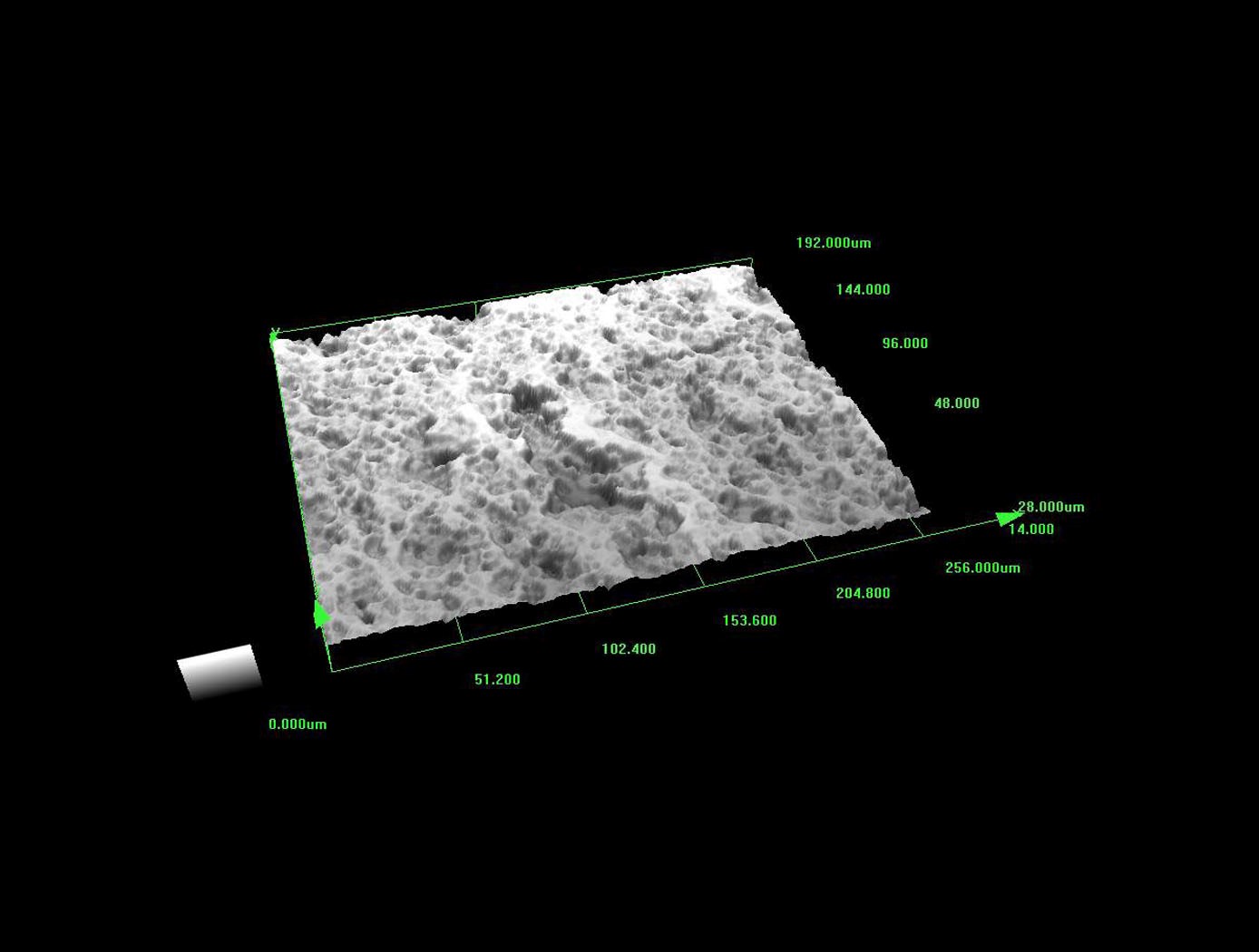 The Molecular Adsorber Coating (MAC) was developed at Goddard to address material outgassing. Outgassing can cause significant degradation of sensitive space instruments, potentially reducing the operational lifetime of an entire mission. For more down to earth applications MAC is an easily applicable coating that can be beneficial in areas where contaminants and volatiles need to be collected and contained such as pharmaceutical, food industry, and electronics manufacturing. This particular technology is helping contribute to a better Earth and environment by controlling harmful volatile organic compounds. Click on